
A Biomechanical Approach to Cranial Osteopathy: Beginner to Intermediate Self Paced Training (45 hrs)
An accelerated crash course that you can learn and practice at your own pace.
In this course you will learn Cranial Osteopathy from a biomechanical approach to understanding & assessing the Cranial Mechanism and well as learn to identify and treat Cranial Patterns of Dysfunction, Cranial Trauma & their Bodily Adaptations.
This is a Level I & Level II course with no pre-requisites other than being an accredited Osteopath / Manual Osteopathic Practitioner or another accredited Health Practitioner where Manual Therapy is an integral part of your scope of practice, including Athletic Therapists, Massage Therapist, Physiotherapists, or Chiropractors. It is a pre-requisite for Treating the Obstetrical Patient Throughout all of the Stages of Pregnancy: an Osteopathic Approach as well as our Pediatric Osteopathy Certification Program.
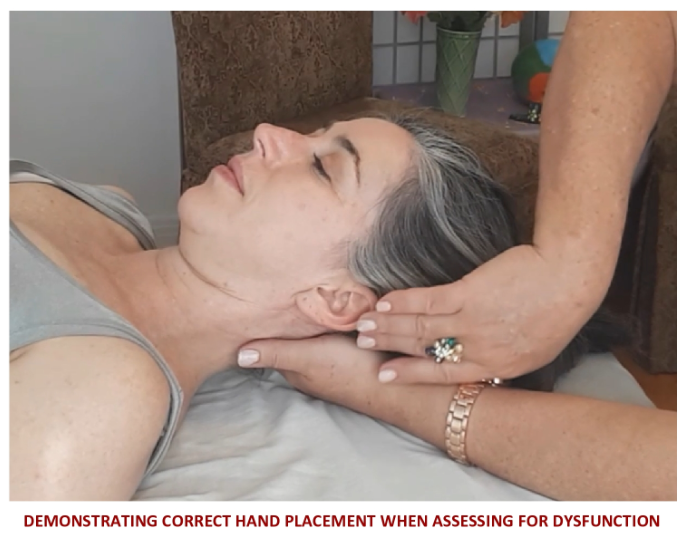
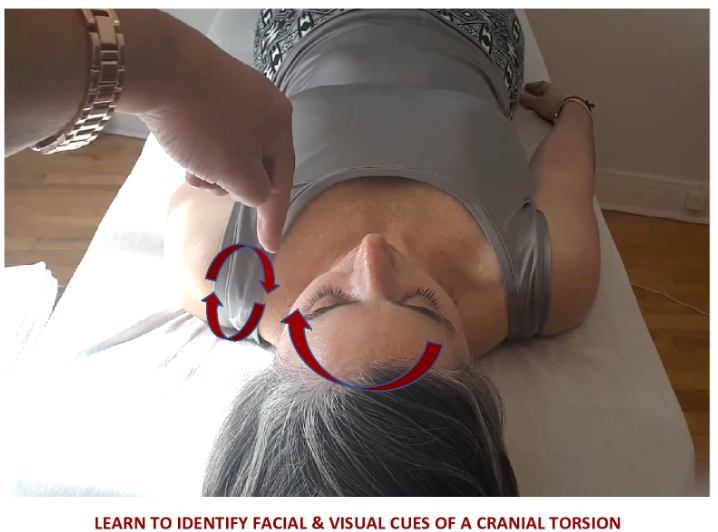
This course contains dozens of demonstration videos as well as hands-on practice assignments and is self paced, allowing you watch the videos as many times as you want and review the course material at your own pace. There are hands-on practice assignments to be completed throughout the course, encouraging you to develop the hands on skills necessary to be a competent Cranial Osteopath s you progress through your learning material.
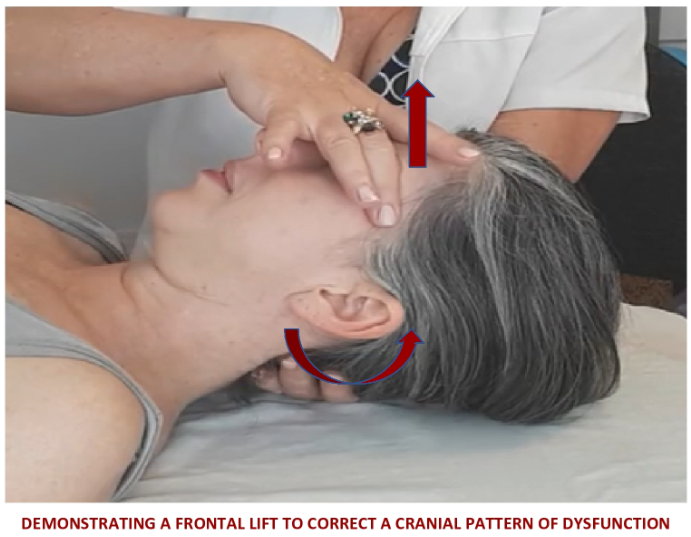
Each chapter contains instructional theory and videos, and homework assignments with are due at the end of the course in order to achieve a 45 hour Certificate of Completion. You get access to the downloadable and printable Workbook immediately upon enrollment, as well as access to the Introductory chapters to help you get organized before starting this course.
You will learn the important Anatomy, Physiology, and Biomechanics of the Cranial Mechanism. You will begin to develop your palpation skills to locate each bone, suture, and whether each bone in the Cranial Mechanism has full Amplitude, and how to correct Restricted range of motion . An emphasis on Hand Placement and refining your palpation skills is taught through many instructional videos.
You will also learn about how cranial dysfunction related to maladaptive postural and decompensation patterns, how to identify them, as well as the classical cranial patterns of dysfunction including compaction, torsion, lateral and vertical strains, and side bending rotations. Treatment protocols and strategies are provided for many of these patterns. Your hands-on homework will require you to practice palpating for and identifying these important cranial patterns on various subjects, as well as providing one overall assessment and treatment plan for a subject presenting with a cranial patterns of dysfunction and related bodily postural adaptations. This approach is in keeping with the Osteopathic philosophy of global overall bodily patterns of dysfunction and the importance of taking a global or holistic approach to successful treatment.
Please scroll down to read the course curriculum for detailed information.
Certificates of Completion
Certificates of Completion for 45 hours are awarded to Participants who complete the course by submitting all of the hands-on homework assignments and ompleting the quizzes. Your Instructor will review your homework and send you feedback along with your Certificate of Completion if all assignments are completed satisfactorily. Certificates can be submitted to their respective associations for CPDs / CEUs or can be displayed in their clinics.
This course is suitable for all Osteopaths, Manual Therapist or Physical Therapists with an interest in learning and incorporating a BIOMECHANICAL APPROACH to Cranial Osteopathy into their practice.
This course also contains an additional chapter for Registered Massage Therapists (RMT) on how to incorporate Cranial Manual therapy into your Bodywork treatments.
If you are a Manual Therapist who has never studied the tangible, BIOMECHANICAL MODEL of Cranial Osteopathy, and wish to take a more structured, anatomical approach to understanding the Cranial Mechanism and your clinical assessments, this course is also for you. Practitioners who had only a cursory or brief overview of Cranial Osteopathy during their training would also benefit from taking this course.
For those Practitioners who have experience with the more energetic forms of Cranio-Sacral Treatment, such as Uppledger's Cranio-Sacral Model, or the Biodynamic Model, we respect your prior training because these models are indeed useful when you desire a more energetic approach to healing.
But when you encounter specific symptom patterns related to dysfunctions within the anatomical functioning of the Cranial Mechanism, learning how to treat the Cranium from a more concrete, biomechanical perspective will provide more tangible and predictable results within your treatments.
Students who have trained and even mastered these more energetic approaches will benefit greatly from this course, as it will round out and complete your education and understanding of the Cranium.
This course is a pre-requisite
This course is a pre-requisite for students who do not have a minimum of 45 classroom hours on all of the subjects covered in this course and do not have training in a biomechanical model of Cranial Osteopathy who wish to enroll in the following online courses:
Pediatric Osteopathy Certification Program
Treating the Obstetrical Patient Throughout All Of The Stages of Pregnancy: an Osteopathic Approach
If you are unsure if your prior training exempts you from taking this pre-requisite please review the course curriculum below and contact the Instructor before enrolling at [email protected]
What this course contains
Each chapter contains audio explanations with images as well as video demonstrations of the concepts and palpation techniques for each chapter, as well as homework practice assignments.
Unique Assessment Sheets and Clinical Practice Sheets for beginners, all designed by the Instructor are included, and more. These tools help you learn how to palpate for and diagnose each component of the Cranial Mechanism in a step by step manner that takes the guesswork out of palpation and diagnosis. This learning approach was designed by Maureen Hannah Maher, the course Instructor, and Cranial Osteopath for over fifteen years.
What you will need
Access to a printer to print the Workbook and Worksheets for your hands-on practice homework assignments.
You will also need to order a practice doll like the one you see in the image below:

What you get
A download able and printable version of the Workbook.
Three hours of one on one Mentoring with your Instructor
Certificates of Completion are awarded to Participants who complete the course. Certificates can be submitted to their respective associations for CPDs / CEUs or can be displayed in their clinics.
Join us online and learn how Cranial Osteopathy can be incorporated into your Bodywork practice today!
Have a question about this course ? Did you read the course curriculum? If you still have a question, please feel free to email the Instructor at [email protected]
Please email us at [email protected] if you wish to use an alternate payment method to enroll such as an eTransfer.
Here is what some students are saying about this course:
"I learned alot! My clients are really loving the results I am giving them. They often say they feel very relaxed. I only wish I could treat myself!"
Lucia, Toronto, Canada
"This course so far has given me really clear plans on how to assess and treat specific areas."
Carly, UK
Welcome & Why Cranial Osteopathy Is An Essential Part Of Any Treatment
FREE PREVIEWWhy do I need to learn a Biomechanical Approach to Cranial Osteopathy?
FREE PREVIEWPlanning your Practice and Mentoring Sessions with Your Instructor
FREE PREVIEWUsing The Demonstration Videos to Perfect Your Palpation Skills
FREE PREVIEWThe Value of Continuing Education
What Are the Different Forms of Cranial Treatment?
FREE PREVIEWCourse Structure
Download & Print the Workbook
Buying a Practice Skull
Meet the Father of Cranial Osteopathy William Garner Sutherland, D.O.
How this Discovery Happened and Why its Important
How Cranial Osteopathy relates to the History of CranioSacral Therapy
How "form determines function" applies to Cranial Osteopathy
Quiz - Learning History & Concepts
Introduction to this Chapter
Using the Practice Chart
Video Demonstration - Overview of the Cranial Bones
Video Demonstration - The Occiput
Video Demonstration - The Frontal Bone
Video Demonstration - The Sphenoid
Video Demonstration - The Temporal Bones
Video Demonstration - The Parietal Bones
Locating the Frontal Bone on your Model
Locating the Sphenoid Bone on your Model
Grasping the Temporal Bones on your Model
Contacting the Occiput on your Model
Instructions how to complete homework
DOWNLOAD: Practice Chart Anatomy of the Cranial Bones
DOWNLOAD: The Cranial Bones
Quiz - Learning about Cranial Bones
Is a Suture a Joint?
Why are sutures so important anyway?
Cranial Suture Anatomy
What's in an Name? Locating and Naming the Suture
Upper View of the Cranial Sutures
Posterior View of the Cranial Sutures
Common examples of suture pathology & their role in Cranial Dysfunctions
VIDEO DEMONSTRATION: locating the sutures
VIDEO DEMONSTRATION: locating the Occipito-Temporal Suture
VIDEO DEMONSTRATION: locating the sutures - posterior view
Instructions for Treating Suture Compaction with the V Spread Technique
VIDEO DEMONSTRATION Treating Suture Compaction with the V-Spread Technique
Instructions how to complete homework
HOMEWORK & DOWNLOAD: Practicing Suture Anatomy
HOMEWORK & DOWNLOAD: Instructions for Treating Suture Compaction
Quiz - Learning about Sutures
Have you completed the homework assignment for this chapter?
Meninges ? Another word for Cranial Connective Tissue
The Structure of the Cranial Meninges
What do they do? Functional Anatomy of Cranial Meninges
The Inter-Dependent Role of Meninges from an Osteopathic Perspective
The Role of Meninges in the Cranio-Sacral System
The Concept of Reciprocal Tension Membranes
The Falx Cerebri and the Tentorium Cerebelli
When to use the Vault Holds to treat the Meninges
The Vault Hold and Treating the Cranial Meninges
VIDEO DEMONSTRATION: Global Vault Hold in Treating the Cranial Meninges
VIDEO DEMONSTRATION: Superior Vault Hold to Treat the Parietal Region
VIDEO DEMONSTRATION - Occipital Vault Hold to Release the Tentorium Cerebelli & Brainstem
Instructions how to complete homework
HOMEWORK & DOWNLOAD: Practicing the Vault Hold Procedures in Treating Cranial Meninges
Quiz - Learning about Cranial Connective Tissue
Have you completed the homework assignment for this chapter?
The Primary Respiratory Mechanism according to Sutherland
What purpose does the CerebroSpinal Fluid serve ?
Why is the discovery of the Primary Respiratory Mechanism important for Osteopathy?
What is the Cranial Rhythmic Impulse ?
How the Primary Respiratory Mechanism Works
What is the Sphenobasilar Symphysis ?
What happens during Flexion ?
What happens during Extension ?
VIDEO DEMONSTRATION Global Movement of the SSB in Flexion and Extension
VIDEO DEMONSTRATION - Palpation & Hand Placement of Occiput & Sphenoid in Flexion and Extension (SSB)
VIDEO DEMONSTRATION - Palpation & Hand Placement of Frontal in Flexion and Extension
VIDEO DEMONSTRATION - Palpation & Hand Placement of Temporals in Flexion and Extension (Side View)
VIDEO DEMONSTRATION - Palpation & Hand Placement of Temporals in Flexion and Extension ( Top View)
VIDEO DEMONSTRATION - Palpation & Hand Placement of PARIETALS in Flexion and Extension
HOMEWORK & DOWNLOAD: Practicing Palpating for the Cranial Rhythmic Movement
Quiz - Learning about the Primary Respiratory Mechanism
Have you completed the homework assignment for this chapter?
What is Amplitude of the Cranial Rhythm?
Other Aspects of the Cranial Rhythm
What does Full Amplitude of the SSB feel like ?
What is Restricted Range of Motion?
Learning what Restricted Range of Motion feels like
Video Demonstration - Step 1. Palpate for Amplitude of the Sphenoid
Video Demonstration - Step 2. Palpate for Amplitude of the Sphenoid & Occiput
Video Demonstration - Step 3. Palpate for Amplitude of the Frontal & Occiput
Video Demonstration - Step 4. Palpate for Amplitude of the Temporals
Video Demonstration - Step 5. Palpate for Amplitude of the Parietals
VIDEO - Introduction with your Instructor
VIDEO DEMONSTRATION Overall Palpation Assessment on a Live Model
HOMEWORK: Learning to Palpate the Cranium Rhythm Phases of Flexion & Extension & Restricted Amplitude
Quiz - Learning to Assess the Primary Respiratory Mechanism
Have you completed the homework assignment for this chapter?
What is a Cranial Sinus and why are they Important to Cranial Osteopathy?
What is a Cranial Sinus and why are they important to Cranial Osteopathy?
A Flowing System: the Structure of Venous Sinuses
What's a Ventricle? Locating the Ventricles of the Brain
A Summary of the 3rd and 4th ventricles Role in Intra-Cranial Congestion
Lets review the Main areas of Drainage of the Cranial Venous Sinus System
Examples of Functional Pathologies of the Venous Sinus System
Health Benefits of CV4 Technique
Palpation Protocol for Dysfunctions of the Venous Sinus System
VIDEO - Introduction with your Instructor
VIDEO DEMONSTRATION Palpating for Dysfunctions of the Venous Sinus System & using the CV4 Technique
HOMEWORK & DOWNLOAD: Practice Protocol to for Identifying Dysfunctions the Cranial Venous Sinus System on a Patient
Quiz - Learning about the Cranial Venous Sinus System
Have you completed the homework assignment for this chapter?
The Question of Treatment Interval for Cranial Dysfunctions
The Cranial Osteopathy Assessment Chart & the Advantages of Using a Charting Method in your Practice
Using the Cranial Diagram
Charting the SphenoBasilary Symphesis - Optional Chart
Homework & What Your Goals Should Be
Homework Formats Available for Download
Homework #1: Anatomy of the Cranial Bones
Homework #2: Name the Suture
Homework chapter #3: Treating Suture Compaction
HOMEWORK #4: Practicing the Vault Hold Procedures in Treating Cranial Meninges
HOMEWORK #5: Practicing Palpating for the Cranial Rhythmic Movement
HOMEWORK #6: Learning to Palpate the Cranium Rhythm Phases of Flexion & Extension & Restricted Amplitude
HOMEWORK #7: Practice Protocol to for Identifying Dysfunctions the Cranial Venous Sinus System on a Patient
HOMEWORK & DOWNLOAD: Using the Chart to Assess the Spheno-Basilary Symphesis
Where & How to Submit your Homework
Reminder: Are you taking this course as a pre-requisite?
WELCOME TO SECTION CR 2
Introduction with your Instructor EDIT audio volume & speed
EDIT AUDIO REMOVE BEG Why are Patterns a Useful Way to Assess and Treat Cranial Dysfunctions?
Download the Workbook for Section 2 here
VIDEO Intro with Instructor - Postural Adaptations & Cranial Dysfunctions
How Cranial Patterns of Dysfunction Relate to Postural Patterns of Adaptation
Forward head posture as a form of cranial adaptation
Cranial Patterns of Dysfunction and Myofascial Imbalances
The Mechanics of How Cranial Patterns Caused by Head Misalignment
Examples of Cranial Patterns as Primary Lesions
The Importance of Treating Cranial Patterns as Secondary Lesions
The Boomerang Effect of Secondary Lesions
An Overview of Cranial Dysfunctions
Intro with Instructor - Common Causes of Cranial Dysfunctions
Quiz Postural Adaptation & Cranial Patterns of Dysfunction
Video Discussion with your Instructor about the Various Cranial Patterns of Dysfunction EDIT AUDIO QUALITY
You will need your Practice Skull
Learning all about Compactions
Video Discussion with your Instructor about Compactions
What are the clinical signs of a Compaction?
What are the symptoms of a Compaction?
What are some common causes of Compactions?
Goal of Treatment of Compactions
Cranial Charting a Compaction
Cranial Chart with Right Frontal Compaction
Cranial Chart with Left Side Compaction
Video Discussion with your Instructor: Cranial Pattern of Fixed in Flexion
What are the clinical signs of a cranium that is Fixed in Flexion?
Fixed in Flexion in Childhood
Cranial Charting Fixed in Flexion
Overview Goal of Treatment: Reduce Flexion
Goal of Treatment when Correcting Fixed in Flexion
Treating Fixed in Flexion (additional to video)
New Lesson Treatment of Fixed in Flexion
Learning all about Fixed in Extension
Video Discussion with Your Instructor: Cranial Pattern of Fixed in Extension
What is Fixed in Extension?
What are the clinical signs of being fixed in extension?
What are the symptoms of being fixed in extension?
What are some common causes of being Fixed in Extension?
Fixed in Extension in Childhood
Goal of Treatment of being Fixed in Extension?
Quiz Flexion, extension and compaction
ADD ONSTRUCTIONS Homework assessing & Correcting Compaction, Fixed in Flexion, or Fixed in Extension
Video Discussion: Cranial Pattern of Torsions
What is a Torsion?
What is a Right SBS Torsion ?
What is a Left SBS Torsion ?
What are the Visual Cues of a Torsion?
What are the Energetic Signs of a Torsion?
What are the Symptoms of a Torsion ?
Common Causes of Cranial Torsions as Primary Lesions
Video Discussion with your Instructor about Lateral & Vertical Strains
What is a Strain?
What is a Lateral Strain ?
What is a Right Lateral Strain ?
What is a Right Lateral Strain ?
What is a Left Lateral Strain ?
What are the Visual Cues of a Vertical Strain?
What are the Clinical Symptoms of a Strain ?
What are Some Common Causes of Vertical Strains?
Some Causes of Vertical Strains Resulting from Impact Injury
Clinical Signs of Lateral and Vertical Strains
Goal of Treatment for Correcting Strains
Technique # 1 to Reduce Lateral Strains
Technique #2 to Reduce Vertical Strains
Suggested Protocol when Correcting a Strain
Learning all about Side Bending Rotations
Video Discussion with your Instructor about Side Bending Rotations
What is a Side Bending Rotation ?
The Visual Cues of a Side Bending Rotation
What are the clinical signs of a side bending rotation?
What does a Right Side-Bending Rotation feel like?
What does a Left Side-Bending Rotation feel like?
Possible Causes of a Side Bending Rotation
What are the symptoms of a side bending rotation?
Cranial Charting a Side Bending Rotation
Treatment Priorities for Side Bending Rotations
Suggested Protocol when Correcting a Side Bending Rotation
Indirect Approaches to Treating a Side Bending Rotation
Side Bending Rotations and Dental Mal Occlusions
Quiz Torsions, Strains & Side Bending Rotations
DEMONSTRATION VIDEO - Client Interview & Assessment
DEMONSTRATION VIDEO: Client Interview for Health History Potential Indications of Cranial Dysfunction
DEMONSTRATION VIDEO: Assessing a Client for Any Pattern of Dysfunction
Download for Homework #1
HANDS ON HOMEWORK ASSIGNMENT #2
Download for Homework #2
HANDS ON HOMEWORK ASSIGNMENT #3 - Cranial Dysfunctions & Postural Imbalances
Download for Homework #3
Instructions for Submitting your Homework
DOWNLOAD PART 2 WORKBOOK HERE
Maureen Norah Maher, BA, DO(Qc), DO(MP) Osteopath Practitioner and Educator

Maureen "Hannah" Maher